

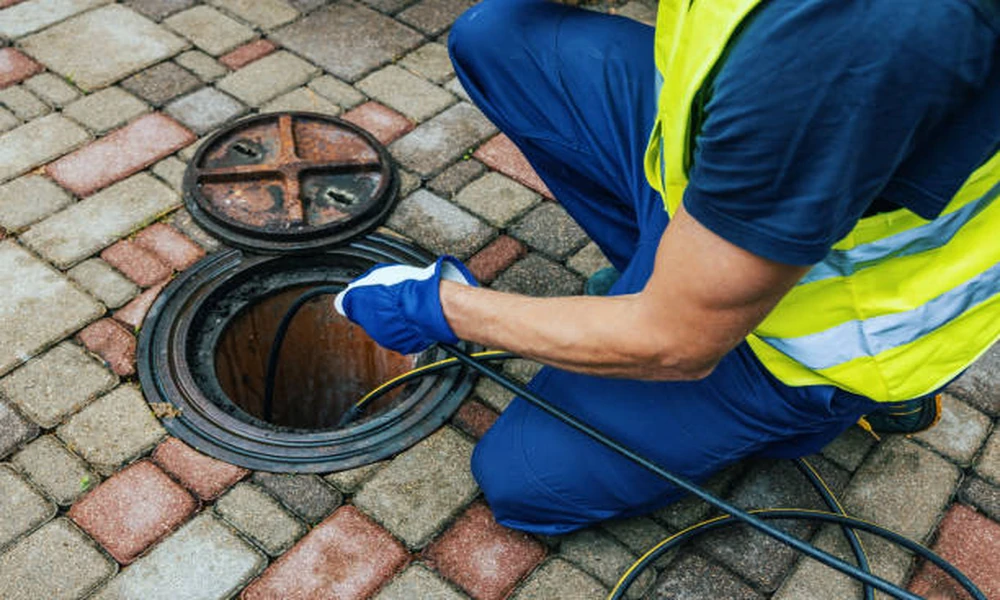
A standard sewer inspection camera carries 100 feet of push cable or more. A small transmitter in its head lets a technician mark the exact spot and depth of a problem from the yard above. That one tool has changed plumbing more than any wrench. Repairs that once began with a shovel and a guess now begin with recorded video and a measured location.
The guessing is especially costly here. Hard water leaves scale inside water heaters, valves and fixtures across the valley. Freeze-thaw cycles shift soil around buried lines and split hose bibs that were left with a hose attached. Older neighborhoods still carry clay and cast iron sewer laterals that roots find easily. A careful plumber in Salt Lake County works through problems in a fixed order because each of these local conditions can mimic another.
That order is simple. First the plumber confirms what is actually failing. Then they choose the least invasive repair that will last, and before leaving they test the result. The sections below follow that sequence for the three calls homeowners make most: hidden leaks, stubborn drains and failing water heaters.
Emergency Plumbing Services anchor what Salt Lake Plumbing offers around the clock. Leak Detection and Repair and Camera Inspections handle the diagnostic side of nearly every call. When the trouble traces back to the tank or the tankless unit, its Water Heaters work covers gas, electric, heat pump and tankless repair, flushes and code upgrades. Founded by Chad and his son Colton, the team serves Salt Lake City, Millcreek, Murray, Sandy, Draper, Herriman and the rest of the county’s west and south side. For a burst line, an overflowing drain or no hot water at all, call the 24/7 emergency line at (801) 851-0080 and a plumber in Salt Lake County will walk you through shutting the water off while a technician heads your way.
The First Twenty Minutes on Site
Before any tool comes off the truck, a professional gathers facts:
- The history. When did the problem start, which fixtures are affected, and has anyone tried a chemical cleaner? Caustic drain products change how a plumber handles the line.
- The shutoffs. They locate the main valve and the water heater valves and test that each one actually closes.
- The pressure reading. A gauge on an outdoor spigot shows whether pressure is too high, which wears out valves, or too low, which points to scale or a supply leak.
- The meter. With every fixture off, a moving meter dial confirms water is escaping somewhere.
Tracing a Leak Without Opening Every Wall
The EPA’s WaterSense program reports that ten percent of homes have leaks wasting 90 gallons or more each day. Many of these sit inside walls, under slabs or in the yard. Finding them without demolition takes several methods working together:
- Isolation. Closing branch valves one at a time narrows the leak to a single zone of the house.
- Acoustic listening. Sensitive ground microphones pick up the hiss of pressurized water through concrete or soil.
- Thermal imaging. A hot water leak under a slab shows up as a warm patch on the floor.
- Moisture mapping. Meters track the spread of damp drywall back toward its source.
- Segment pressure testing. Capping a section of pipe and watching a gauge confirms whether that section is losing water.
Only after the source is pinned down does the plumber open a wall, ideally a single small panel.
Camera First, Then the Right Cleaning Tool
For drain and sewer complaints, the camera goes in before any cleaning. It shows whether the blockage is grease, roots, a collapsed section, an offset joint or a belly where waste pools. That answer decides the tool.
- Snaking (cabling). A rotating cable punches through a soft clog or cuts roots back. It is fast and inexpensive, but it opens a path rather than cleaning the pipe wall.
- Hydro jetting. High-pressure water scours grease, scale and root mass from the full diameter of the pipe. It suits kitchen lines and sewer mainlines with repeat stoppages. A pipe that is already cracked or badly corroded may not tolerate it, which is another reason the camera goes first.
After cleaning, the camera runs a second time to confirm the line is clear and to record the pipe’s true condition.
| Problem | Diagnostic step | Repair method | When it escalates |
|---|---|---|---|
| Slow kitchen drain | Camera through the cleanout | Snaking or hydro jetting | Grease returns within months, so the line needs scheduled jetting |
| Main sewer backup | Camera plus locator to mark depth | Cabling to restore flow, then jetting | Camera shows a break, belly or collapse |
| Roots in a clay lateral | Camera at each joint | Root cutting and jetting | Roots re-enter at multiple joints, so the lateral needs lining or bursting |
| Hidden supply leak | Meter test, isolation, acoustic or thermal check | Section repair through a small opening | Repeat pinhole leaks point to a repipe |
| Split hose bib after a freeze | Pressure check with the bib valve closed | Replace with a frost-free sillcock | Water has reached the wall cavity or basement |
| No hot water from a gas tank | Pilot, flame sensor, gas valve and venting checks | Component replacement | Tank body leaks or the unit is past its service life |
| Tankless unit losing flow | Error codes, inlet filter, scale check | Descaling flush | Heat exchanger is damaged by scale |
Repairing a Sewer Line or Digging It Up
Once the camera has measured the damage, the plumber weighs trenchless methods against excavation:
- Pipe lining cures a resin sleeve inside the old pipe. It works for cracks and root entry when the pipe still holds its shape.
- Pipe bursting pulls a new pipe through the old one while fracturing it outward. It suits lines that are too damaged to line.
- Excavation remains the answer for collapsed sections, severe bellies or spots where the lateral meets the city main at a failed connection.
Diagnosing the Water Heater
Water heater calls follow their own checklist, depending on the type of unit:
- Gas tanks. The plumber checks the pilot or igniter, flame sensor, gas control valve and draught at the vent. Rumbling usually means hard water sediment on the tank floor, and a flush may quiet it if the tank is not too far gone.
- Electric tanks. Upper and lower elements and thermostats get tested with a meter. A single failed element often explains lukewarm water.
- Tankless units. Error codes, the inlet screen and the flow sensor come first. A descaling flush is the most common fix on valley water.
- Safety components. The temperature and pressure relief valve is tested, and the expansion tank is checked for a waterlogged bladder. A drip from the relief valve often traces to thermal expansion rather than the heater itself.
- Replace or repair. Water seeping from the tank body cannot be repaired. At that point the conversation turns to replacement and the code upgrades a new unit requires.
The Final Check
The job ends the way it began, with measurements. The plumber reads the meter again, rechecks pressure, runs hot water at the farthest fixture and runs the camera through any line that was cleaned. You get the footage and a plain account of what failed. You also get a clear sense of which problems are fixed for good and which are worth watching. That second look is what separates a repair that holds from one that brings the truck back next season.
