
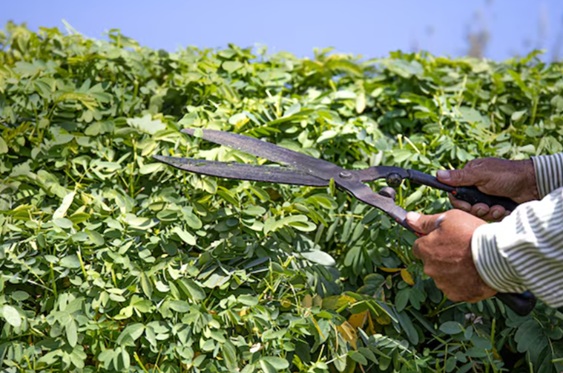
How to prune young trees for strong growth
Young trees should be pruned. It is, however, often ignored or misunderstood. Although it may seem counterintuitive to prune a growing tree, this will actually encourage a stronger, more balanced and healthier growth. When done correctly, pruning can shape the structure of a plant, prevent further damage, and provide stability over time. Understanding why trees are pruned is crucial to their health and longevity.
1. Why Pruning Matters for Young Trees
Young trees, like children, need early guidance to become strong and balanced. If they are not properly guided, they can develop a poor branch structure or shape. They may also have an uneven distribution of weight.
Pruning helps to establish a solid foundation. The central leader is formed by the main vertical trunk, and the evenly spaced limbs support the canopy as the tree grows. The removal of weak limbs, competing limbs, and limbs that cross will help prevent more serious changes in the future.
The structure should be strong enough to resist heavy winds, rain and natural growth. Properly pruned trees are less likely than others to break or get disease.
2. Encourage structural strength
You must maintain and identify a dominant leader, which is the central trunk that forms the spine of a tree. Many species naturally produce more than one leader. However, this can make the tree unstable and more prone to splitting. Pruning helps direct energy towards the main stem, eliminating secondary stem competition.
Also, the lateral branches must be controlled. The branches that are too close together or at narrow angles may be weaker and split under stress. The inner canopy can be reached by selectively thinned branches. This balanced distribution provides a foundation for long-term growth.
3. Improving Health and Reducing Disease
Pruning young trees is essential for their health. You can stop the spread of decay and pests by removing damaged, dead or diseased branches. Early removal of limbs rubbing together or that are too crowded will improve airflow and reduce humidity, and make the environment less conducive for fungi and bacteria.
The wounds of a young tree will heal faster and the infection risk is reduced. By maintaining proper branch spacing and allowing for the canopy to be lit, you can also encourage healthy leaf growth.
4. Timing is everything
Pruning at the right time is essential to a healthy tree’s growth. It is best to prune most trees in the late winter or early spring before new growth begins. The tree can heal quicker during the dormant period because it is less stressed.
Summer pruning can be beneficial in certain circumstances. This is true in particular if you are looking to remove or reduce unwanted branches. If you prune too late, your new cuts may be exposed to winter damage. Always research the pruning requirements of the tree species that you are working on to get the best results.
5. Proper Technique Matters
Poor pruning can do more harm than good. Avoid “topping”, or removing large sections of the canopy. It can cause the structure of the tree to weaken, making it more susceptible to decay and sunburn. The three-cut method is a safe way to remove large branches, without damaging the bark.
Always cut the branch outside of the collar (the raised area between the trunk and branch). The tree will seal up the wound, preventing disease from entering. Clean, precise cuts made with sharp tools will promote faster healing.
6. Long-Term Benefits
Pruning young trees will pay dividends in the long run. Trees that are well-shaped require less maintenance in the long run, are safer near power lines and other structures, and can survive severe weather. The tree will also look more attractive and balanced, which is good for landscaping.
Final Thoughts
Pruning is more than just trimming branches. This early training will influence the way a tree grows throughout its lifetime. Pay attention to structure, timing and techniques when you want young trees to grow healthy and strong. It is important to prune trees properly, not only for their beauty, but also so they can be resilient, stable, and thrive over many generations.
This post was written by a professional arborist at Tree Trimming Largo FL. Robert Miller is the owner of Arbor Wise Professional Tree Care, a locally owned and operated tree service company that offers superb lawn care by the most experienced Arborists. Arborwise Tree Services is a tree removal company that offers stump removal, tree pruning, stump grinding, fertilization, and tree restoration. We have an extraordinary lawn care industry notoriety covering the Pinellas county area.