

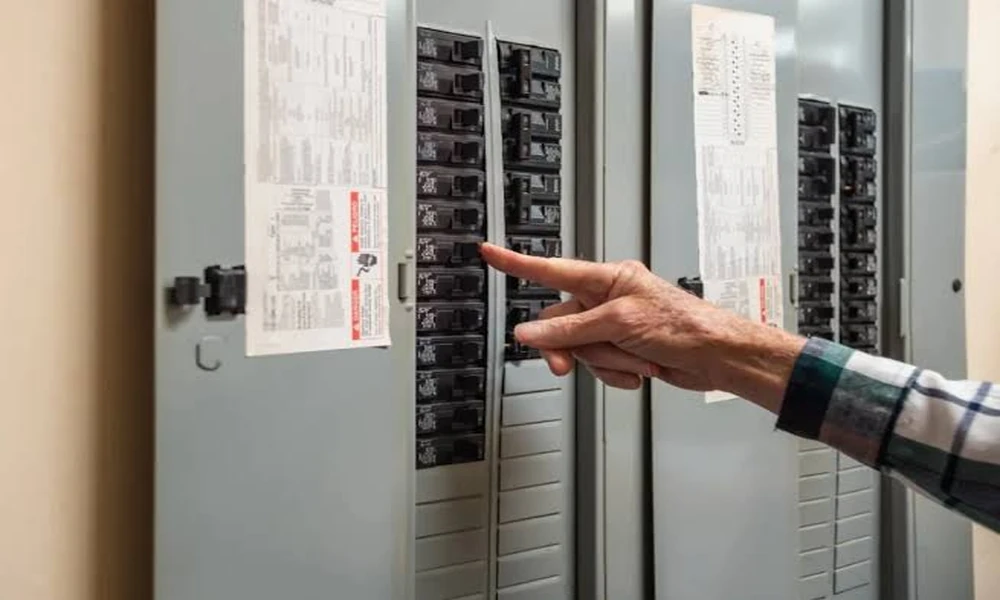
Homes across Washington, suburban Maryland and Northern Virginia are being asked to do more with electricity than their builders ever planned for. A Level 2 car charger in the garage, a heat pump replacing an aging gas furnace, an induction range in the kitchen. Each one feels like a single purchase. Together, they can push an older electrical service right to its limit. In this region, the fix for that limit even has its own nickname: the heavy up.
A heavy up means increasing the size of the electrical service feeding a house, usually from 60 or 100 amps to 200 amps or more. It touches the panel, the meter base, the service cable and the local utility’s equipment. Electrical contractors such as Paradise Construction LLC, which handles panel upgrades, home rewiring and EV charger installs across DC, Silver Spring and Fairfax, hear the same question from homeowners all the time. Is the bigger service truly required, or is there a smarter path?
The honest answer depends less on how many new appliances arrive and more on how the house actually uses power. That is good news. A careful look at the numbers often reveals more room than homeowners expect, and sometimes less.
Why So Many Homes Hit the Ceiling
Think of electrical service as a budget measured in amps. Every appliance spends part of it, and the main breaker sets the spending limit.
Many rowhouses, bungalows and postwar colonials in the region were wired when the biggest loads were a refrigerator, a window air conditioner and maybe an electric dryer. A 100 amp service handled that easily. Add overnight car charging and electric heat, and the budget starts to look thin.
This is not just a local pattern. In a survey of EV owners by the Electrical Safety Foundation, more than half said they needed an electrical panel upgrade before installing home charging equipment. The foundation also urges an assessment by a qualified electrician before buying a charger, since older homes may not handle the extra demand safely.
The Loads That Change the Math
Not every appliance matters equally. A small group of modern upgrades does most of the heavy lifting:
- Level 2 EV chargers commonly sit on a 40 or 60 amp circuit and can draw close to that for hours overnight.
- Heat pumps with electric backup strips add their biggest load on the coldest mornings, exactly when showers, coffee makers and hair dryers are running too.
- Induction ranges usually call for a 40 or 50 amp circuit, though they rarely run every zone at full power.
- Electric tankless water heaters are the true heavyweights, with whole house models often needing more than 100 amps on their own.
Notice the difference in behavior. Some of these run long and steady, while others spike briefly and drop off. That pattern matters far more than the number printed on each breaker handle.
Breaker Count Is Not Capacity
Open almost any panel and add up the breaker ratings. The total will usually exceed the main breaker, sometimes by double. That is normal and not a warning sign by itself, because nothing in a house runs at full draw all at once.
Electricians size services with a load calculation under Article 220 of the National Electrical Code. It applies demand factors that reflect how homes really behave. For existing homes, the code also allows a different method: using a full year of actual peak demand data from the utility, then adding the new load with a safety margin on top.
Smart meters have made that second route far more practical. A house that looks maxed out on paper sometimes shows a real peak well below its service rating. Another house that seems fine on paper may already be running hot during summer cooling. Real data settles the argument in a way guesswork cannot.
Options That Stop Short of a Heavy Up
When the numbers are close, several approaches can add a new load without replacing the whole service.
Load management systems
These devices watch the total current flowing into the house. When the dryer and oven are running, they throttle the car charger back, then restore full speed once demand drops. Recent editions of the electrical code recognize these systems when sizing a charger’s load, which can make a 100 amp home workable for EV charging.
Dialing the charger down
Most Level 2 chargers can be set to 24 or 32 amps instead of their maximum. For drivers with an ordinary commute, a lower setting still refills the battery overnight with plenty of hours to spare.
Circuit sharing
Some homeowners pair the charger with an existing 240 volt circuit, often the dryer, using a device that lets only one appliance run at a time. It avoids a new circuit entirely when panel space is scarce.
Choosing lighter appliances
Equipment choices matter too. A heat pump sized correctly needs smaller backup strips. Heat pump water heaters draw a fraction of what tankless electric models demand, and some newer versions plug into a standard 120 volt outlet.
When a Bigger Service Is the Honest Answer
Clever workarounds have limits. Some homes need a heavy up regardless of the load math.
Fuse boxes and 60 amp services rarely leave room for modern living. Certain older panels, including Federal Pacific Stab-Lok and Zinsco models, carry long records of breakers failing to trip and are worth replacing on their own merits. Warm breakers, buzzing sounds, scorch marks or lights dimming when large appliances start all point toward a system already under strain.
Long range plans matter as well. A household expecting two electric vehicles, full electric heating and an induction kitchen will likely outgrow a 100 amp service even with load management in place. Doing the upgrade once, with spare breaker spaces for the future, often costs less than staging several partial fixes. It is also a natural moment to correct outdated grounding and add whole house surge protection.
How a Heavy Up Unfolds in the DMV
The process starts with that load calculation and a site visit to look at the meter location, the service entrance and the condition of the existing wiring. A permit follows, issued by whichever jurisdiction covers the address, such as DC’s Department of Buildings, Montgomery County’s Department of Permitting Services or Fairfax County’s Land Development Services.
Next comes the utility. Pepco, BGE and Dominion each require an application for a service upgrade, and their scheduling often sets the overall timeline more than the electrical work itself. Homes with underground service or tight rowhouse layouts can involve extra coordination around the meter and service entrance.
On installation day, power is typically off for several hours while the new panel, meter base and service conductors go in. An inspection confirms the work meets code, and the utility reconnects the service. From first call to final reconnection, the wait is mostly paperwork and scheduling rather than construction.
Planning Beyond the Next Purchase
The most useful step comes before any work begins. Listing every electric upgrade the household expects over the next five to ten years gives an electrician a clear target to plan around. With that picture in hand, the choice between a load management device and a full service upgrade becomes a practical decision rather than a guess.
A home that runs smoothly on electricity is not always the one with the biggest panel. It is the one whose capacity was matched carefully to how the family actually lives, with enough room left over for whatever comes next.
